


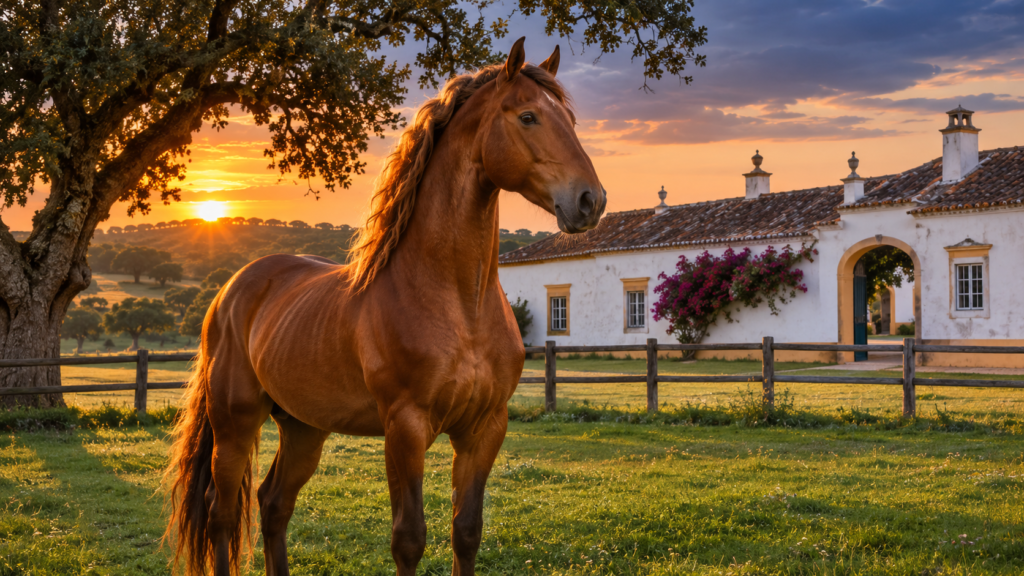
AI generated images
Portugal’s relationship with the horse is visible in its countryside, historic estates and living equestrian traditions. The Lusitano, a celebrated Portuguese breed, is associated with classical riding and a long heritage of breeding and horsemanship. In the Alentejo, open landscapes and historic stud farms create a setting where this culture feels connected to place.
Alter do Chão is home to the Coudelaria de Alter, the royal stud farm founded in the eighteenth century to breed horses for the Portuguese court. Its history links royal patronage, agricultural practice and the development of the Lusitano breed. Estremoz offers a complementary view of Alentejo life, with its castle, marble architecture and traditions rooted in the surrounding countryside. Visits to equestrian venues can depend on schedules and access, so check current arrangements when planning.
The Lusitano is admired for its agility and presence, and its history is closely tied to Portugal’s riding traditions. Learning about the breed in the Alentejo adds context that a city visit cannot provide: the landscape, stud-farm practices and royal patronage all shaped the horse culture that continues today.
Equestrian facilities are working places, and visits or demonstrations may depend on their calendar. Confirm access before travelling and avoid assuming that a stable visit or riding activity is included unless the current tour page specifies it. With expectations set, the itinerary can pair horse heritage with the area’s castles, marble towns and regional cuisine.
Follow a living tradition through the landscapes that sustain it.
Explore Alentejo tour options and ask about the Portuguese Horse itinerary.
.


