


AI generated images
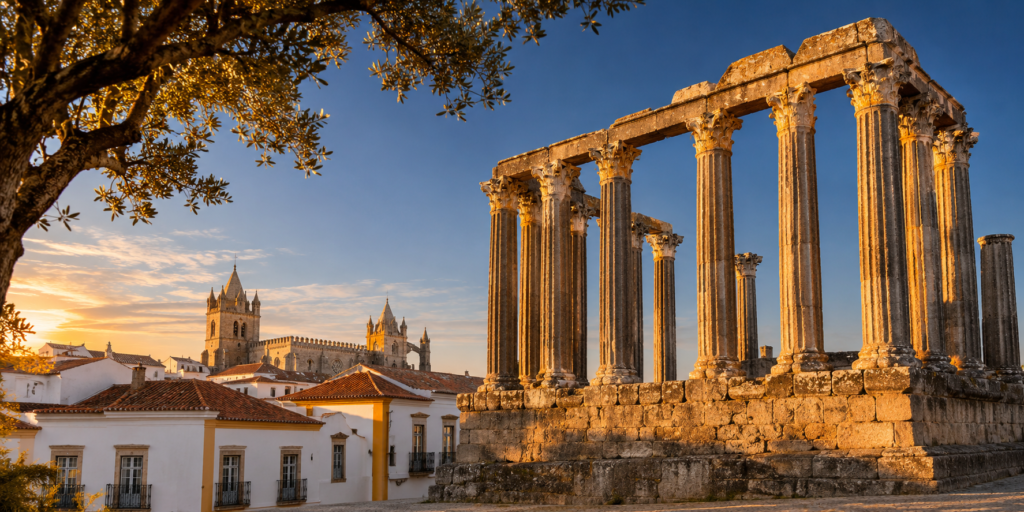
Évora’s historic centre is one of Portugal’s great places for wandering. Enclosed by old walls and recognized as a UNESCO World Heritage site, it brings together Roman remains, medieval lanes, whitewashed houses and elegant squares. The Roman Temple, often associated with Diana, stands near the cathedral and the graceful arcades of Praça do Giraldo, creating a compact portrait of the region’s layered past.
The city is also a lively Alentejo capital, where history shares space with university life, cafés and a food culture shaped by the surrounding countryside. Local cooking makes use of bread, olive oil and herbs, while nearby vineyards and cork landscapes speak to the region’s agricultural traditions. A private guided visit can link the monuments with the wider story of the Alentejo, from Roman presence to later religious and civic life.
Évora is particularly rewarding on foot. The historic centre is compact, but its layered streets invite frequent pauses: a Roman column, a Gothic doorway, a shaded courtyard or a tiled façade can each prompt a different question. The city’s scale makes it easy to combine major landmarks with the small details that give the Alentejo capital its character.
Regional food is another way to understand the landscape. Olive oil, bread, herbs, cheeses and wines reflect the agricultural life of the surrounding plain. Ask your guide for suggestions that suit your tastes and schedule, whether you want a leisurely lunch or a short café stop. Admission, meals and tastings vary by tour, so consult the current booking details before finalizing plans.
Give Évora the time its quiet grandeur deserves.


